
Hare
🐇 Fun Facts About the Irish Hare 🐇
-
The Irish hare is one of Ireland’s oldest mammals—it’s been here since the Ice Age!
-
Unlike rabbits, hares live above ground in small nests called forms, not burrows.
-
A male hare is called a jack, a female is a jill, and a baby is known as a leveret.
-
Hares are nocturnal, meaning they come out mostly at night.
-
They’re built for speed—hares can run up to 70 km/h!
-
Hares have long back legs, short tails, and big ears to help them survive in the wild.
-
They don’t hibernate and are active all year round.
-
Their diet includes grass, herbs, and twigs. They are herbivores.
-
Hares prefer open land like grasslands, bogs, and moorlands but may dig shallow spots in wet peat.
-
Each hare has its own territory with several resting spots.
-
Irish hares are protected, but can still be hunted in open season (Sept–Feb) with a license.
-
Unlike rabbits, hares are mostly solitary and don’t live in groups.
-
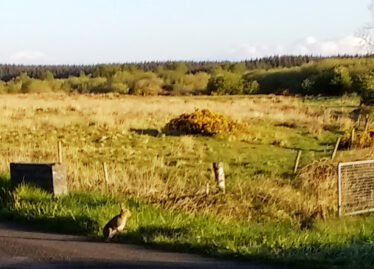
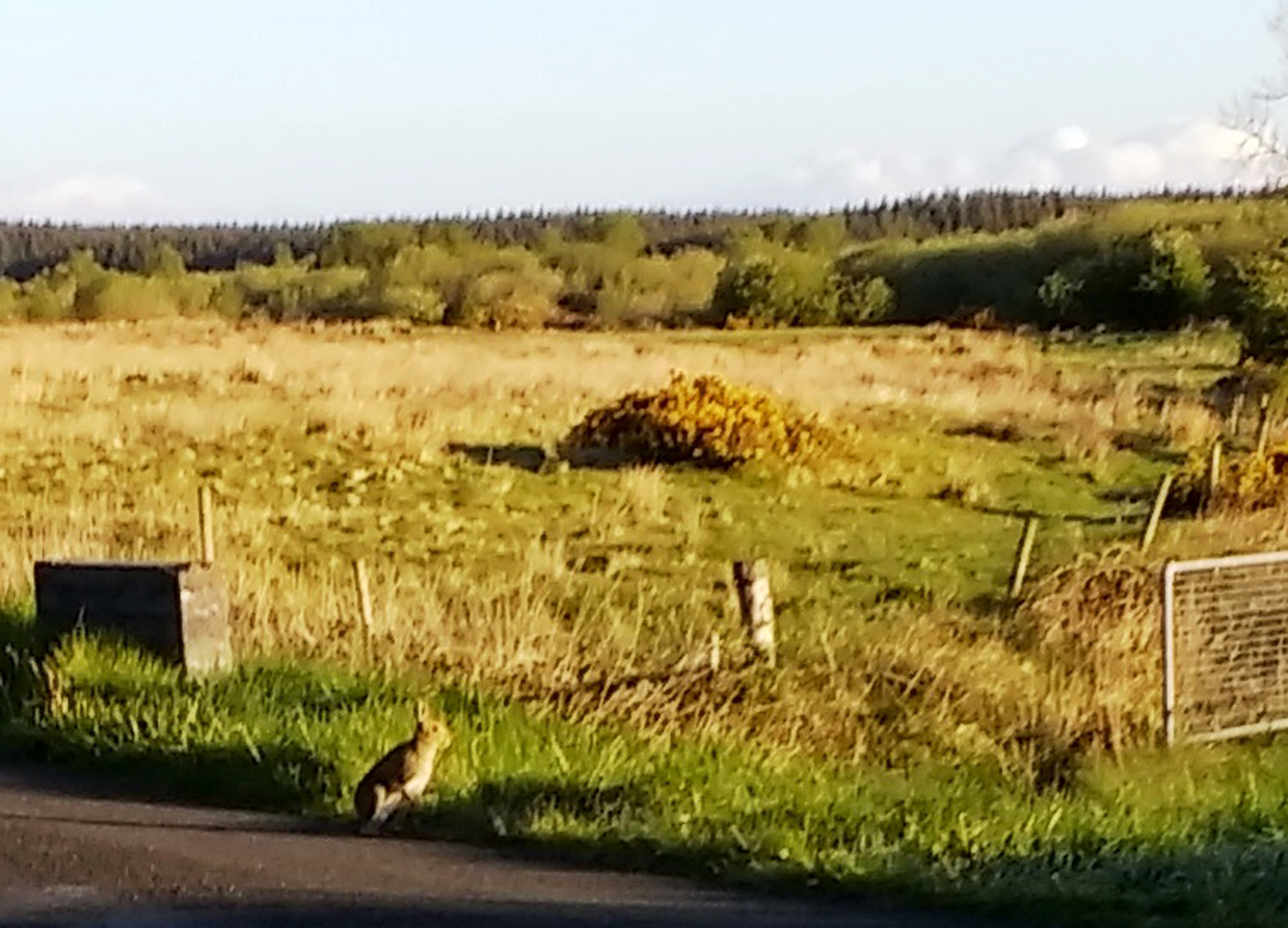
If you spot a hare, count yourself lucky. They are a special part of Ireland’s natural heritage and are spotted quite regularly in Milltown’s countryside.
The Irish hare is one of Ireland’s oldest mammals—it’s been here since the Ice Age!
Unlike rabbits, hares live above ground in small nests called forms, not burrows.
A male hare is called a jack, a female is a jill, and a baby is known as a leveret.
Hares are nocturnal, meaning they come out mostly at night.
They’re built for speed—hares can run up to 70 km/h!
Hares have long back legs, short tails, and big ears to help them survive in the wild.
They don’t hibernate and are active all year round.
Their diet includes grass, herbs, and twigs. They are herbivores.
Hares prefer open land like grasslands, bogs, and moorlands but may dig shallow spots in wet peat.
Each hare has its own territory with several resting spots.
Irish hares are protected, but can still be hunted in open season (Sept–Feb) with a license.
Unlike rabbits, hares are mostly solitary and don’t live in groups.
If you spot a hare, count yourself lucky. They are a special part of Ireland’s natural heritage and are spotted quite regularly in Milltown’s countryside.
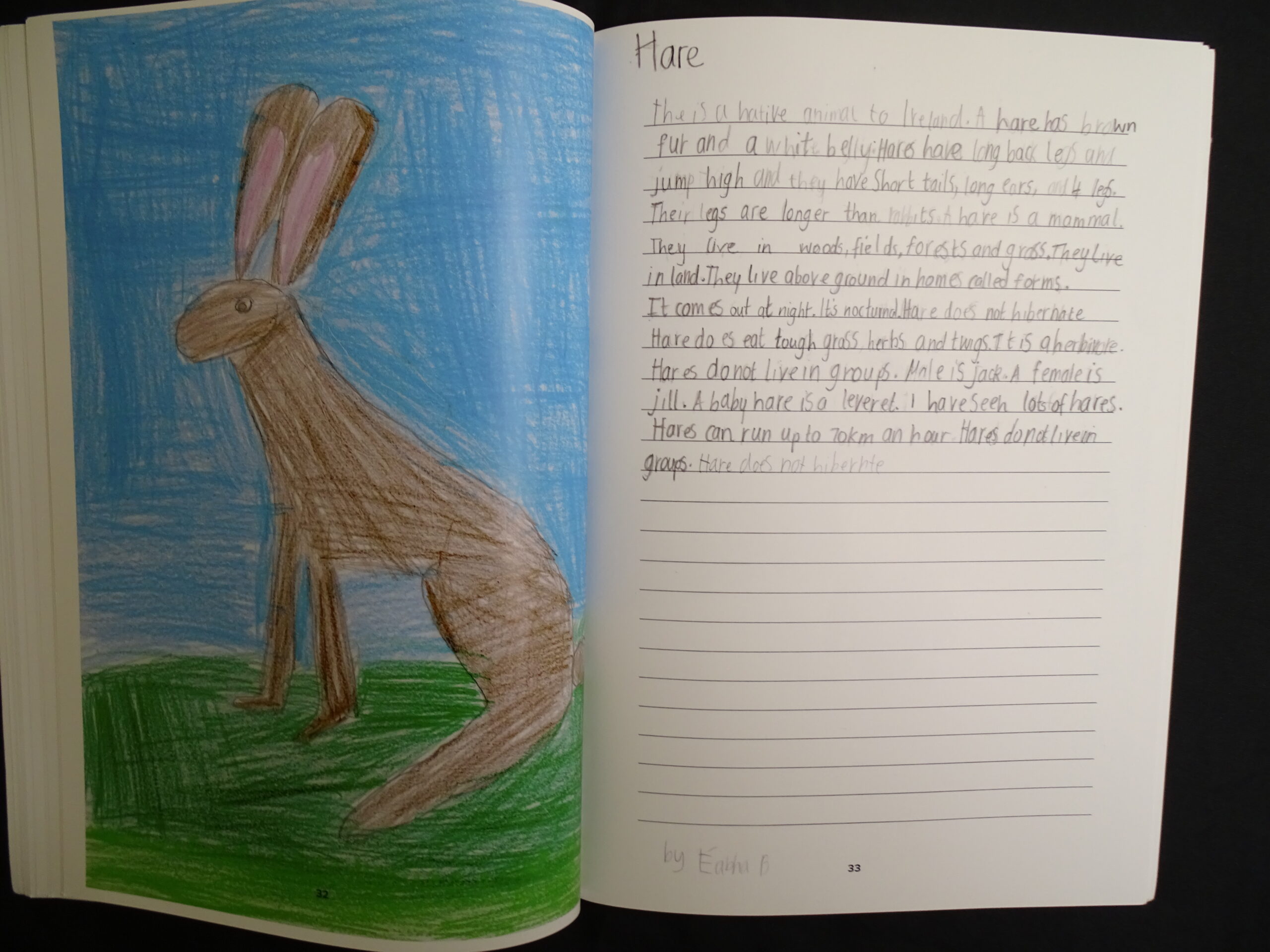
Source: The hare is a native animal to Ireland. A hare has brown fur and a white belly. Hares have long back legs and jump high and they have short tails, long ears and four legs. Their legs are longer than rabbits. A hare is a mammal. They live in woods, fields, forests and grass. They live on land. They live above ground in homes called forms. It comes out at night. It’s nocturnal. Hare does not hibernate. Hares eat tough grass, herbs and twigs. It is a herbivore. Hares do not live in groups. Male is jack. A female is jill. A baby hare is a leveret. I have seen lots of hares. Hares can run to to 70km an hour.
Information Board on River Clare: The Irish hare is possibly our longest established mammal. It was even here during the Ice Age. The hare lives in open habitats – grassland, moorland, salt marshes and bogs.
Hares live above ground, but in wet peat areas they may dig a shallow depression. Each hare has a territory and each territory has several nests called “forms” where they rest by day.
The Irish hare is a protected species but is classified as a game species and may therefore be hunted under license during open season which runs from late September to the end of February.
No Comments
Add a comment about this page