
The Fox
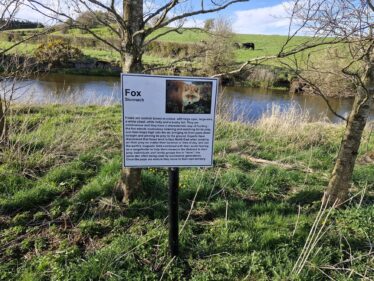
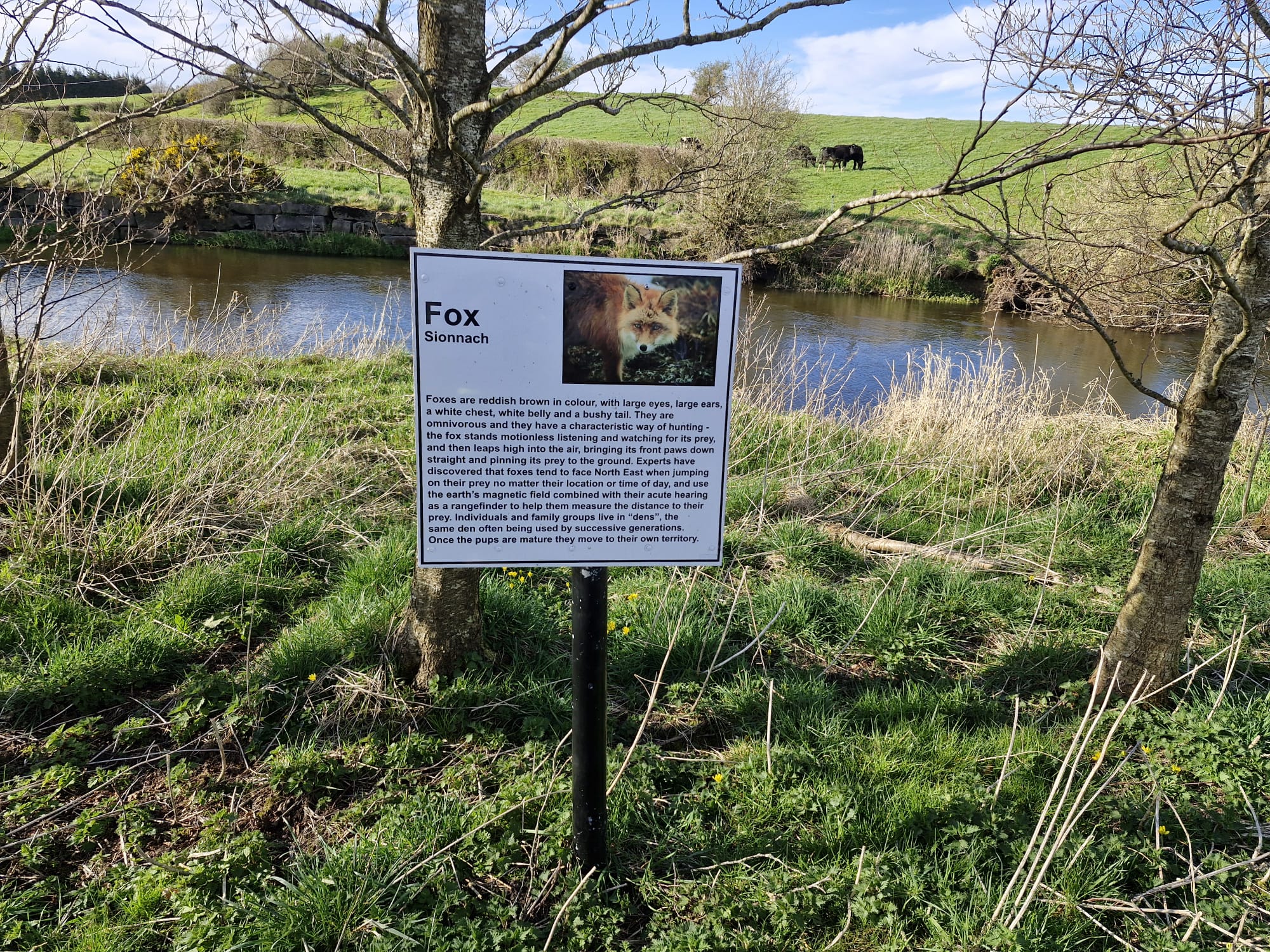
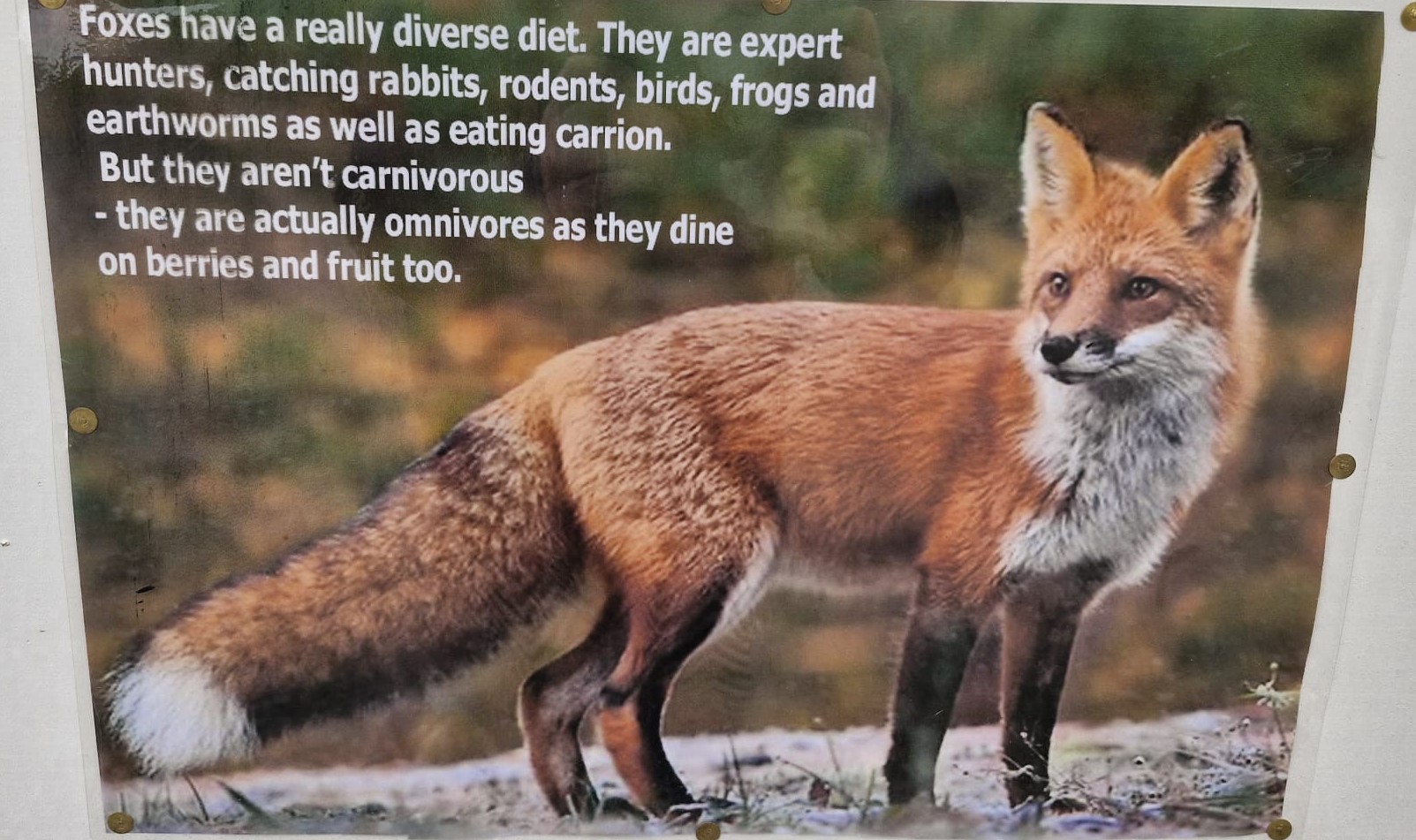
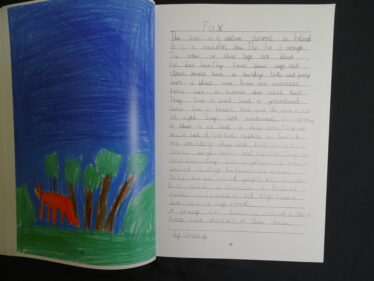
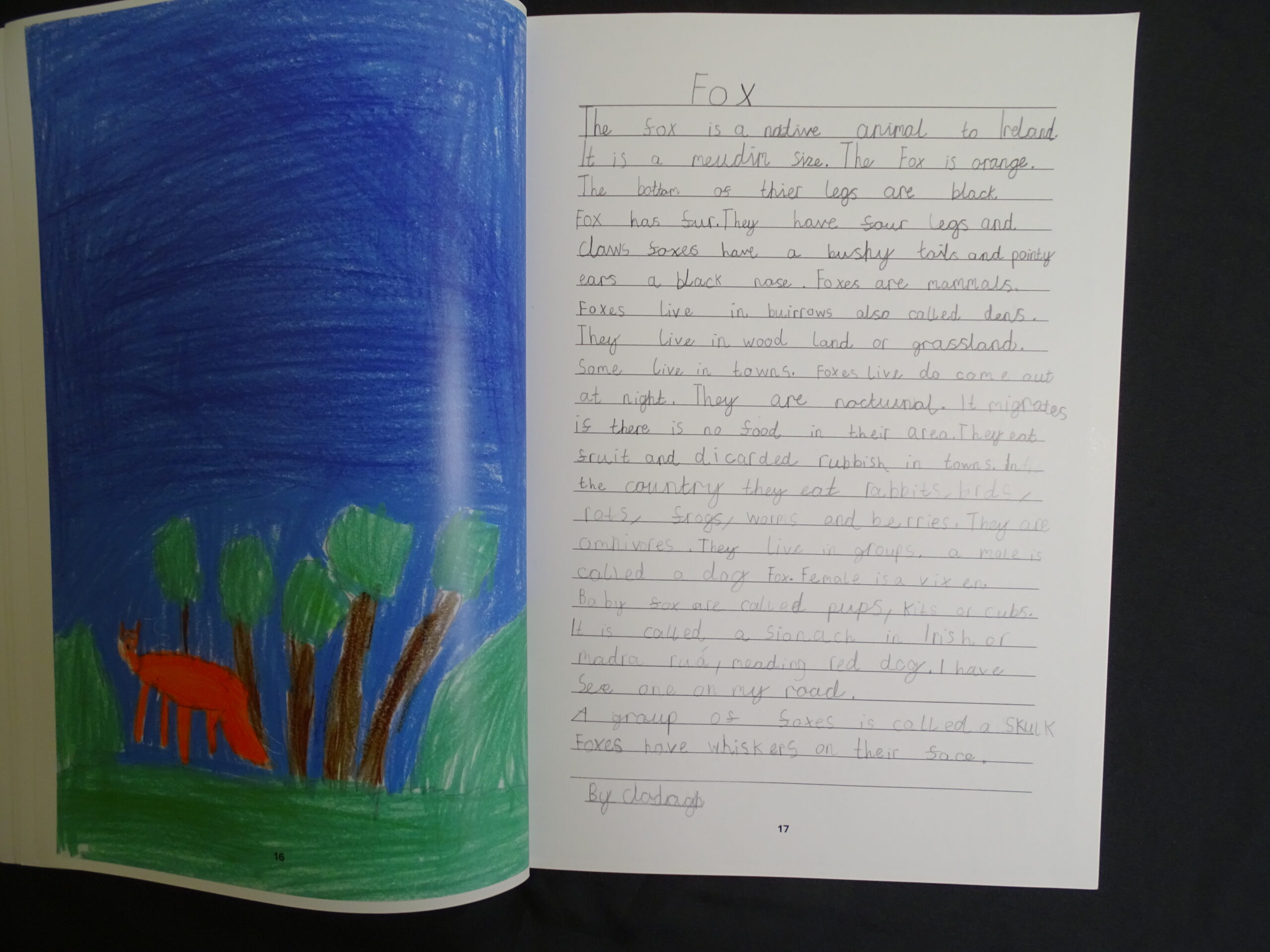
Foxes are reddish brown in colour, with large eyes, large ears, a white chest, white belly and a bushy tail. They are omnivorous and they have a characteristic way of hunting. The fox stands motionless listening and watching for its prey, and then leaps high into the air, bringing its front paws down straight and pinning its prey to the ground. Experts have discovered that foxes tend to face North East when jumping on their prey no matter their location or time of day, and use the earth’s magnetic field combined with their acute hearing as a range finder to help them measure the distance to their prey. Individuals and family group live in dens, the same den often being used by successive generations. Once the pups are mature, they move to their own territory.
In Irish folklore, the fox (sionnach in Irish) is often seen as a clever, cunning creature , sometimes a trickster, but also a symbol of intelligence and survival. In some old tales, foxes could shape-shift into human form, outsmart hunters, or lead people astray (similar to the way fairies could).
Fox hunting, though now controversial and largely banned, was a major tradition among the Anglo-Irish gentry. It entered Irish poetry, music, and art though the fox was always admired for its ability to escape!
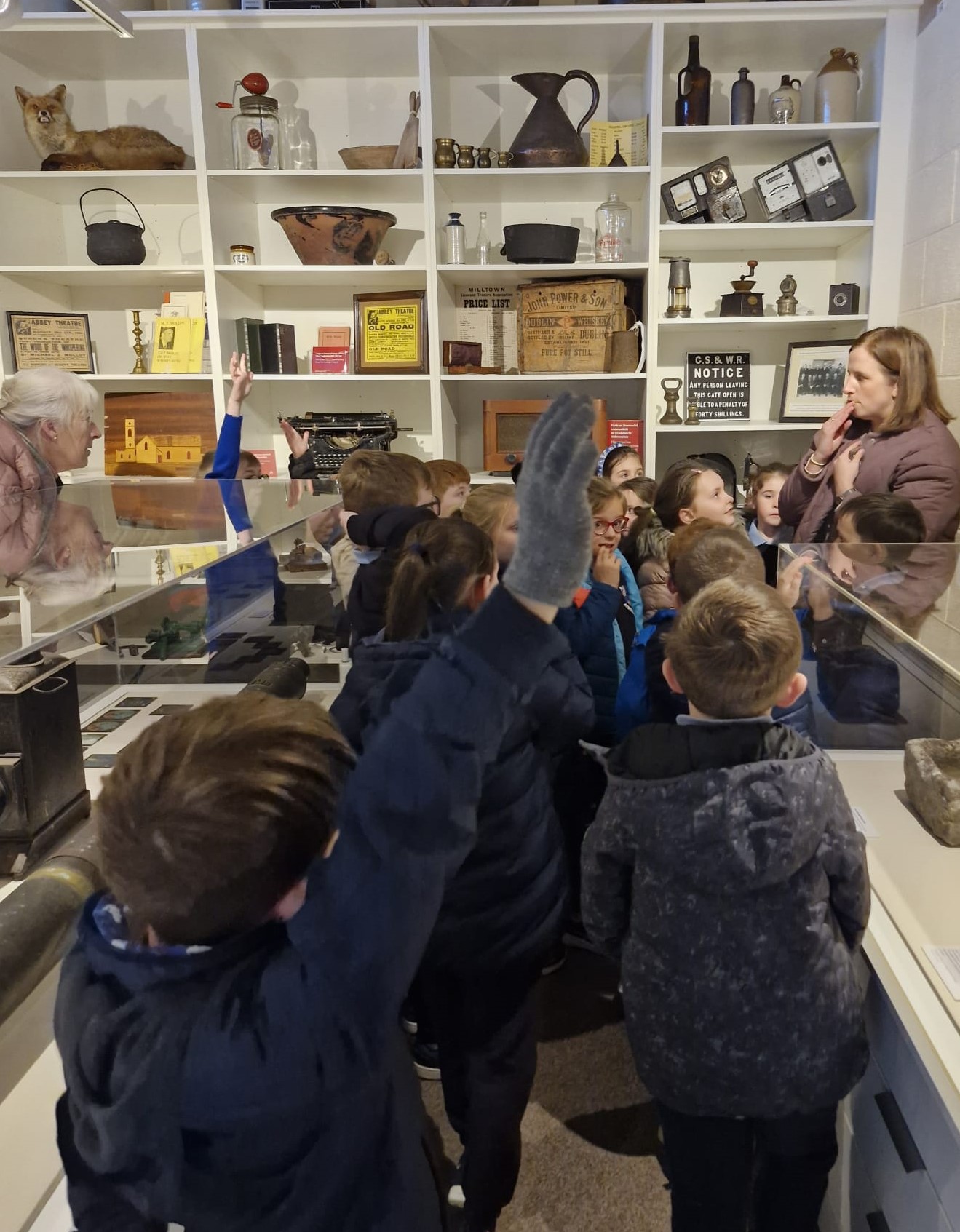
The fox has become almost a symbol of the wildness and resilience of rural Ireland, especially because it can live close to human settlements but still remain very much part of Milltown’s wildlife.
Foxes mainly eat small mammals like rats, mice, and rabbits helping to naturally control the populations of these animals, which can otherwise damage crops and forests. They can clean up the environment by scavenging carrion (dead animals) and food waste. This helps reduce the spread of disease and keeps ecosystems healthier. Foxes sometimes eat fruit and berries. When they move around and leave droppings, they help spread seeds, contributing to plant growth and biodiversity. By preying on certain animals and competing with others (like crows or other scavengers), foxes help keep ecosystems balanced and healthy.
🦊 “Ní féidir an sionnach a chur amú faoi dhó.”
Translation: “You can’t fool the fox twice.”
Meaning: The fox is wise to tricks, once fooled, it learns quickly. A warning about being careful and learning from mistakes.
🦊 “Rian na mná agus cos an t-sionnaigh, ní fheiceann siad iad.”
Translation: “The track of a woman and the foot of the fox — you can’t see them.”
Meaning: Both the fox and a wise woman can be very clever and leave no trace — it’s a compliment to cleverness and subtlety!
🦊 “Tá breis feirge ar an sionnach gortaithe.”
Translation: “The wounded fox is more fierce.”
Meaning: Someone who is hurt or cornered can be even more dangerous or determined than before.
🦊 “Níl luach an tsionnaigh ach i gcroiceann.”
Translation: “The only value of the fox is in its skin.”
Meaning: This is a more critical view suggesting that sometimes value is only found on the surface, not deeper. (In older times, fox fur was prized.)
🦊 Fox references in old Irish poems:
In some old Irish poetry, foxes are described as “sleamhain mar shionnach” — “as slippery as a fox”, again showing how they were seen as clever survivors.
No Comments
Add a comment about this page